



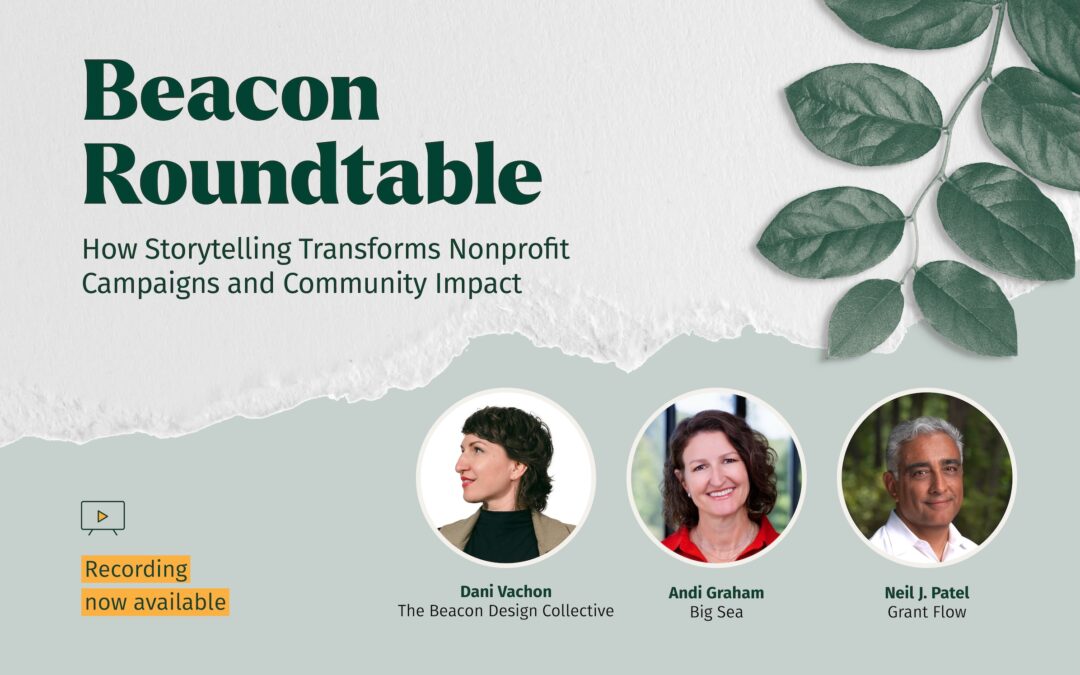
In a world full of digital noise, an effective story is still the best way for a nonprofit to connect with people. Recently, we hosted a roundtable with three experts: Dani Vachon from Beacon Design Collective, Andi Graham from Big Sea, and Neil Patel from Grant Flow. They discussed how using the right stories can help nonprofits build trust and get more support.
Here is a detailed breakdown of the key insights shared during our session.
Building trust: centring the true hero
Trust is the most important asset a nonprofit has. However, many groups accidentally hurt that trust by acting like they are the “saviour” in their marketing.
Andi Graham mentioned that the best stories are the ones that focus on the people the nonprofit helps. Instead of the organization being the hero, the people the organization serves are the heroes of their own journeys. The nonprofit’s role is to be a guide or a supporter who helps clear the path.
Another key insight was about being honest while upholding safety. Some nonprofits work with people in very tough spots, like survivors of violence and abuse. In these cases, you can’t always show a real photo of a person or use a real name. The speakers explained that using “composite characters” (combining a few true stories into one) or custom drawings is a much better way to tell the truth than using “fake” stock photos. Stock photos of happy, smiling people come off as inauthentic, often don’t match the reality of the work, and can make donors feel like the message and work being done isn’t real.
Making stories part of your big plan
A story shouldn’t just be something you post on social media once in a while; it should guide everything your organization does.
Neil shared a great way to think about your granting audience: splitting them into “head” and “heart” funders. “Heart” funders make decisions based on emotion and human connection while “head” funders look for logic, facts, and proof. To reach both, he suggested finding the “God particle“. This refers to one powerful statistic that proves your impact, such as showing that your program’s eviction rate is only 1% compared to a normal rate of 13%. It’s that one number makes the emotional story feel solid and real, and can be backed up by real-world stories of people you’ve helped.
Having a clear “brand strategy” also helps keep your story consistent. Sometimes, nonprofit leaders might want to “shape shift” or change their story just to get a specific grant. The panel warned against this behaviour because it confuses donors and hurts your reputation. Instead, everyone on the team should know their “cocktail party line“—a short, simple way to explain what the group does in about 7 to 20 words, that stays the same no matter who is talking.
When crafting and using stories, it’s vital to remember you are not your own target audience. The information you want to share might not be what your donors actually care about. You have to put yourself in the shoes of the people you are trying to reach and use language that speaks to them.
How to actually do the work
The panel explored one of the biggest problems many nonprofits have: not having enough time to find and save stories. The panel of experts gave some very practical advice on how to fix this.
- Create a routine: Andi suggested “Moment Mondays”. This is when staff members share one small thing that happened the week before where they saw the mission in action.
- Build a story bank: Don’t wait until it’s time for the annual report to look for stories. Consider doing short, 15-minute interviews with “boots on the ground” staff regularly. This creates a “vault” of transcripts and ideas you can use whenever you need them.
- Use stories to grow: Our panel shared a story about a client whose website traffic went from 2,000 to 10,000 visitors. They did this by taking their impact stories and making them easy to find on search engines (SEO). This brought in new people who then signed up for newsletters and became donors.
- Be patient: Storytelling is a long game. When it comes to things like large grants, it can take a year of telling the right story before you see the results.
Interview techniques: When talking to participants, use open-ended questions and don’t be afraid of silence. Leaving a little bit of blank space often encourages people to fill it with something natural and meaningful.
Overcoming internal challenges
A major part of practical implementation and meaningful impact is making sure your whole organization is on the same page. For instance, some marketing and development teams function in two separate worlds that never meet. This creates a “disconnect” where the stories told in fundraising emails don’t match what people see on social media. Start with one “North Star” strategy, and ensure all the communications work ladders up to that strategy.
And remember, while fundraisers often change jobs every 12 to 18 months, the people giving out the money stay for a long time. If every new fundraiser tells a different story, it erodes an organization’s credibility. Using a CRM like HubSpot can help track what has been said before so the message stays consistent. Leadership must also buy in to the strategy, and refrain from going rogue and publishing content that doesn’t fit the brand at all.
Wrapping up
At the end of the day, storytelling is about being a “translator”. It’s about taking the hard, technical work you do and knowledge you hold and translating it into something people can understand and care about. By focusing on the people you serve, staying consistent with your plan, and building a library of real, engaging stories, your nonprofit can bridge the trust gap and gain the support it needs to change the world.