



Deciding when to rebrand and how to pitch it to your board
Many leaders might think a rebrand is just a cosmetic update: simply a new logo, fresh colours, and a modern font. But at its core, a rebrand is the strategic process of reshaping how the world perceives your organization, realigning your visual language, messaging, and overall identity with your actual mission.
So, how do you know when it’s time to rethink your identity? You need a rebrand when there is a fundamental disconnect between your current position and your future goals. It’s not about making things look pretty, but instead about removing the operational friction that’s holding your organization back.
Whether you lead a nonprofit, a non-governmental organization, or a government agency, failing to communicate your values is a serious problem. Here are some clear signs that your organization needs a rebrand, and a clear strategy to help make it happen.

Sign 1: You’re suffering from “brand debt”
First, we need to define a key concept: brand debt. Brand debt happens when your organization’s work evolves faster than its messaging.
Perhaps your regional agency now offers ten vital environmental or social services. But the public only knows you for a single program you started ten years ago. When you suffer from brand debt, your staff constantly have to start conversations by clarifying your expanded mandate, saying things like, “Well, we actually do a lot more than just that.” If this happens regularly, your brand is actively failing you.
This creates a real cost. Nonprofits lose out on major grants because funders simply do not understand their full scope. Non-governmental organizations miss out on crucial international partnerships and global support when their messaging fails to convey the extent of their impact. Government agencies suffer from low public engagement because citizens don’t realize what services are available. A rebrand pays off this debt and brings your public image back into alignment with your actual work.

Sign 2: You’re failing the “line-up test”
Try this simple exercise: print out your logo, your website homepage, and your main public-facing brochure, then place them on a table next to materials from your peers and partner agencies.
Does your brand look like a modern, active organization … or does it look out of date? Some nonprofit boards and public sector committees suffer from a “poverty mindset”. They believe looking scrappy or amateurish makes them look grassroots. They think a completely non-polished brand proves they’re frugal with donor money or tax dollars.
This is a risky trap to step into. An amateur brand doesn’t signal frugality to major funders or the public. In reality, it signals a lack of organization and a severe limit to your capability.
The partnership and public trust advantage
Institutional funders, big corporate sponsors, and government bodies look at your organization as an investment. They’re looking for reliability, capacity, and scale. When your brand looks duct-taped together, it doesn’t tell them you spend every dime on the mission. Instead, it tells them you lack the internal capacity to manage a major influx of cash. This makes you look like a high-risk investment.
Furthermore, larger brands and potential partners fiercely protect their reputations. If a major corporate sponsor agrees to partner with you, they’re going to put your logo next to theirs on their website, in their annual report, and at their major events. If your visual identity looks messy, outdated, or hastily thrown together, it actively degrades their brand equity. Behind closed doors, decision-makers will hesitate. They’ll worry that your lack of external polish reflects a lack of internal governance. Ultimately, there’s a significant risk that they’ll pass you over and choose to work with an organization that makes them look professional, stable, and credible by association.
Good design proves you have your house in order. It shows everyone that their financial investment or collaborative effort is safe with you.

Sign 3: The “hidden drawer” syndrome
Pay close attention to how your own staff treats your official materials. Do your program managers design their own event flyers without following the brand guideline? Do your frontline workers or civil servants avoid handing out the official brochures?
When your brand feels too institutional, outdated, or disconnected from the community, your team will stop using it. They’ll literally hide official materials in a drawer, or create their own rogue workarounds. When staff feel embarrassed by or disconnected from your current brand, internal alignment fractures.
A successful rebrand deters this internal sabotage. The rebranding process enables leadership and staff to finally agree on a single, unified vision for the future and gives your team tools they are actually proud to share.
The strategy: Tie it to your strategic plan
If you recognize these symptoms of an outdated brand, you need a strong, well-thought-out strategy to ensure that you move forward. But don’t pitch a rebrand to your board or oversight committee as an isolated marketing expense. If you do, cost-averse leaders will likely reject it.
Instead, embed the rebrand in your organization’s strategic planning process. Position it as a necessary vehicle to support your broader goals. If your strategic goal is to expand conservation efforts, launch a new social justice policy, or secure larger grants, you need a brand that can carry that weight.
Furthermore, don’t start the process by just hiring a graphic designer. That’s one of the biggest mistakes you can make. Jumping straight to visuals creates a disconnected brand based purely on personal taste. Instead, start with stakeholder research and strategy to find out what your reputation is in the real world. Great strategic design always flows from this.
A real world example: Rebranding for clarity and evolution
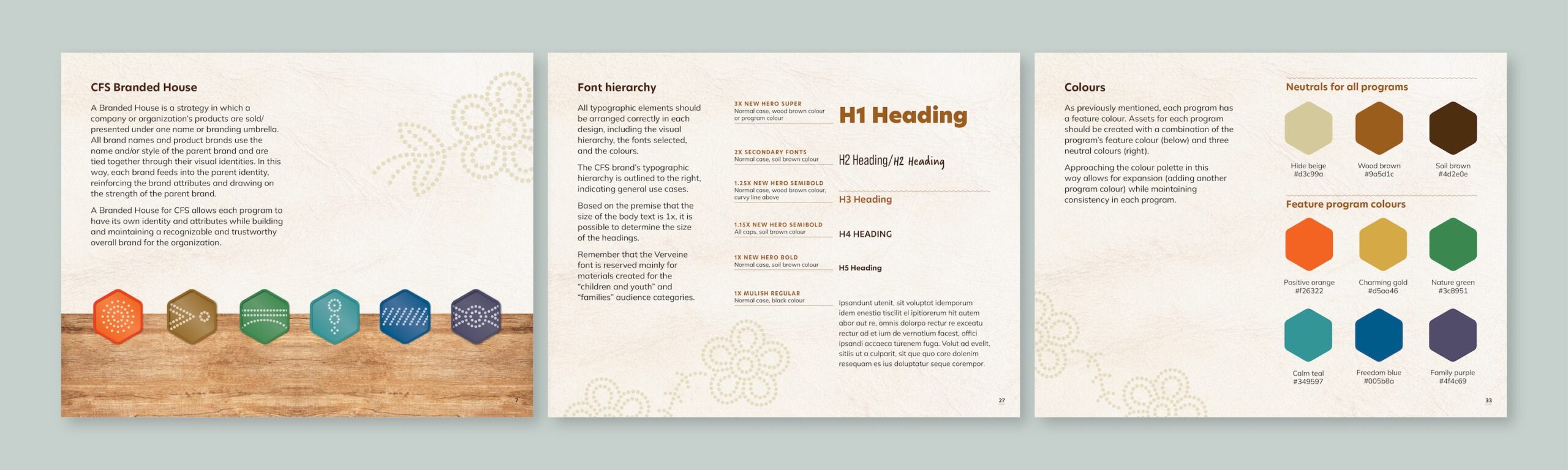
A great example of this kind of brand evolution is our work with Otipemisiwak Métis Government Children and Family Services (CFS). As their mandate grew to serve the Métis Nation within Alberta across a wide range of essential services, they needed a brand that would communicate their expanding impact and continue to serve their growing audience.
When we began working with them, they had multiple incredible programs, but lacked a cohesive brand to represent them all. We didn’t frame their existing materials as a failure, because in and of themselves they had some good attributes. Instead, we focused on how their brand needed to evolve to reflect their modern services and profound community impact.
After an extensive discovery process—which involved circulating a discovery survey to key individuals to understand their perspectives and needs, presenting our findings, and then refining our approach—we developed a branded house strategy. This approach tied the programs together with a consistent visual identity, focusing on visual language, copy style, and audience characteristics. This has allowed each program its own unique identity and attributes, while building a recognizable and trustworthy overarching CFS brand. The updated identity successfully communicates their expanded mission and provides a unified vision that staff are proud to share—all without alienating their target audiences.
How organizations can apply this approach
Organizations that want to check their brand health can begin by identifying their core promise. Before seeking a budget for a full rebrand, conduct a quick internal audit.
Try this simple exercise at your next leadership meeting:
- Ask your leadership team to write down your organization’s core promise in one single sentence.
- Don’t let them look at your website or any official materials.
- Collect the answers, read them aloud, and compare.
If more than half of your directors write down completely different things, you have the proof you need. The differing answers provided by the leadership team during the audit exercise demonstrate the immediate need for strategic alignment.
A rebrand is necessary to get everyone on the same page, while clear next steps make the process much easier to navigate. By establishing a shared framework, your team will be better equipped to make confident, unified decisions. Given that your brand is the bridge between your mission and the public, isn’t it worth making sure that it’s strong enough to carry your organization into the future?
To see how a unified identity drives real results, review our case studies for inspiration on how to start your own brand evolution.